Playing an instrument

Boy, am I lucky I slaved away at the piano as a kid, when I see this:

Now. Honestly. I never did amount to much, on the piano, even though I played it for like… 10-12 years or something. I just never managed to get fluent somehow, always having to struggle with learning the music from the sheet music.

I do sing a lot though, and have done, almost since the same time I started playing the piano. Possibly not the same thing, brain-wise, but still great fun and being a part of a choir is a super duper health boost!

And you know what? I promised myself I’d learn to play the guitar this year, and am strumming along, having learned a handful of chords. Now busy at trying to learn to progress between the chords in a fairly quick manner so I can play rhythmically.

Still a long ways to go though. But yeah, I can definitely see how (and why) playing an instrument will be like fireworks in the brain, in the very best sense of the word fireworks, at that. Can you?

Vänliga Veckan – antar du utmaningen?

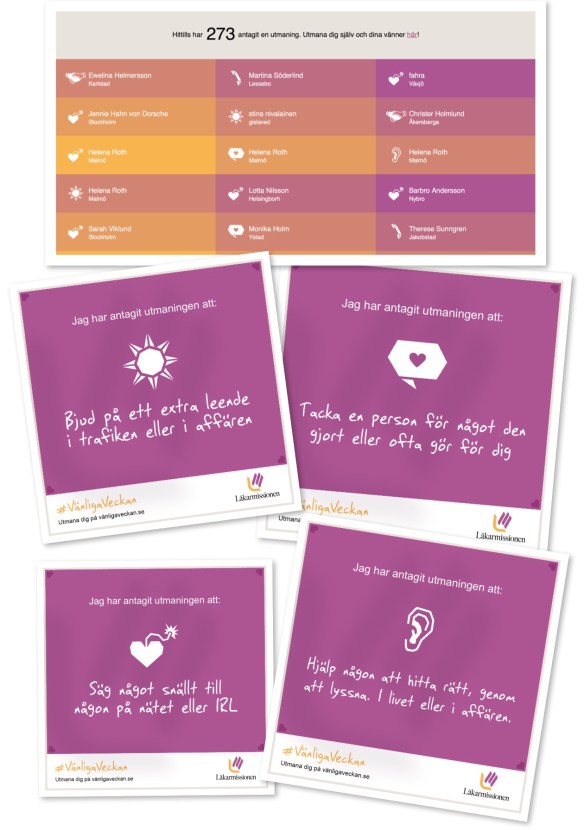
Wivan la upp en status på Facebook om Vänliga Veckan, klickade genast vidare och kom till Läkarmissionens utmaning. Och eftersom jag både gillar vänlighet och utmaningar, så klickade jag raskt in mig på fyra stycken:

Vänliga veckan

Visste du att Vänliga Veckan är en tradition med anor? Kolla in själv: http://vanligaveckan.se/om

Själv hade inte en aning om det, men det gläder mig, eftersom vänlighet, i det lilla, kan göra så enormt stor skillnad. För båda parter. Både den som ger vänligheten och den som tar emot den, har glädje av vänligheter. Jag hoppas därför att även du antar utmaningen och kollar in sidan, så kan vi hjälpas åt att sprida värme, kärlek och vänlighet under veckan. Och kanske det skapar en ny vana hos mig, och dig, och så fortsätter vi sprida glädje, även efter att #vänligaveckan tar slut.

Är du på?

Podcast 6/52 – The disembodied western culture

On Being is, as you might have guess, a favorite of mine, when it comes to podcasts. And this episode is as good as the next. Because they truly all have something special.

In this episode I met Bessel van der Kolk for the first time, and just from spending fifty minutes with him and Krista, I know I would love to listen more to him. He’s an interesting man, and I would love to meet him, talk to him, listen to him tell me more about what he’s discovered during his life.

There’s a part of the show, near the end, where Bessel and Krista talk about the disembodied Western culture, and I’ll just let you read for yourself:

DisembodiedDR. VAN DER KOLK: … Western culture is astoundingly disembodied and uniquely so. Because of my work, I’ve been to South Africa quite a few times and China and Japan and India. You see that we are much more disembodied. And the way I like to say is that we basically come from a post-alcoholic culture. People whose origins are in Northern Europe had only one way of treating distress: that’s namely with a bottle of alcohol.

North American culture continues to continue that notion. If you feel bad, just take a swig or take a pill. And the notion that you can do things to change the harmony inside of yourself is just not something that we teach in schools and in our culture, in our churches, in our religious practices. And, of course, if you look at religions around the world, they always start with dancing, moving, singing …

MS. TIPPETT: Yeah. Crying, laughing, yeah.

DR. VAN DER KOLK: Physical experiences. And then the more respectable people become, the more stiff they become somehow.

Disembodied. Stiff. Detached from ourselves.

Watched The Imitation Game for the second time the other day, and flinched at the ”stiff upper lip”-reference the head master makes when telling the teenaged Alan Turing about his friend Christoffer passing away during a holiday. I flinched, and feel very sad. How much pain have we, as a culture, not inflicted upon each other, by using words and phrases like that, setting that as the norm; being highly disembodied, clearly making it the thing to strive for.

And I think, even though Alan Turing must have been a school boy during the 20s, that it’s still so to a large extent. Rather than make use of our body for learning, school children in many many places are still told to sit still. Disembodied, that’s the culture we live in. And this is just one example, I’m sure I could come up with a number, if I wanted to. I don’t though.

Because perhaps there is a change coming? What with new research such as neuroscience, and new discoveries on learning, physical and mental development etc. Dare I hope?

 

The Imitation Game

A few weeks ago I watched The Imitation Game, and was deeply touched by it. Watching it at the movies, At the movie theater, after my emotional breakdown. when the final minute was up, I was crying my heart out (as you can see in the snap shot selfie I took of my puffy face and red eyes). Fully aware I was in a movie theater, it didn’t really feel like the space to have an emotional breakdown, so I tried to regain my composure. Luckily, my company at the time, took a look at me, and knew precisely why I was crying hard. She said ”The things we humans do to each other”, or something similar. And yup. That was the thought running over and over in my head:

The things we do to each other.

Today I watched the film again. It’s as good. Or perhaps even better. I didn’t fall into complete heartbreak at the end this time around though, but a few tears were shed, not surprisingly. I strongly suggest you watch the movie.

And again. My head keeps on churning on the things we do to each other… Why oh why? Why do we do the things we do to each other? The bad things, the nasty, evil, inhuman and horrendous things we do to each other?

no one can imagineBecause, man, are we ever missing out! Here’s a genius, who…. no. I don’t want to spoil the movie for you, if you haven’t seen it yet. But suffice to say, without him, the world would indeed be a very different place than the world we live in today. And it would have cost a lot more human lives at that.


And Alan Turing is but one example. He made a huge contribution to mankind, but what about the rest, who perhaps are shut down – and there are many ways of doing just that! – before being able to share their gifts with the world? What unimaginable things are we missing out on? Can we really afford to continue this way, where the norm and the normal are for ever deemed ”the way to be”, and if you are not within that ever narrowing spectrum, we shut you out, ignore, ridicule, bully and harass you?

Why, oh why, do we do the things we do to each other?

Läsbingo någon?

@ninkri, en av mina underbara lärarvänner bad mig skapa ett läsbingo till hennes elever, som ska ha läs-fokus-vecka nästa vecka. Jag skapade ju till barnen i julas, och även ett på uppdrag från twännen @lekrum, som mest handlade om att slappa visserligen. *inte så mycket fokus läsning där direkt*

Nåväl, tänkte jag kunde dela med mig av läsbingot även till dig/er (klickar du på länken kommer du till filen i Dropbox, dessutom).

lasbingo

Fritt fram att använda som du vill, när du vill, var du vill. Hoppas det kan komma någon mer än Ninna och hennes elever till glädje. Om det gör det, skulle jag bli överlycklig om du berättar för mig hur det funkade, ok?

Jojka mera! More joik!

Du har säkert sett den, Jon Henriks vackra och själfulla jojk i Talang 2014. Eller så har du inte sett den. Sett förresten, det är lyssna du ska göra. Oavsett om du hört den förut eller ej. Klicka på PLAY, lyssna till hans berättelse, och sen sluter du ögonen när jojken börjar.

Det blir inte mycket vackrare än så, eller hur?

———————-

You’ve probably seen it, the beautiful and soulful joik performed by Jon Henrik on Talang (Got Talent) in 2014. Or you haven’t seen it. And seen…. you should listen. Regardless if you know what this is or you don’t. Press PLAY, listen to his story (English subtitles available), and then you close your eyes when the Sami joik begins.

It doesn’t get more beautiful than that, does it?


Vad vet jag?

Tja du, vad vet jag? Det är en fråga som jag svarar helt annorlunda på idag, jämfört med för bara ett par år sedan. Då visste jag massor. Och eftersom jag dessutom kopplade mitt egenvärde till att jag visste och hade rätt, så var jag en riktigt besserwisser.

Idag. Vad vet jag idag?

Jag skulle nog vilja säga att jag fortfarande vet massor. Har byggt på med mer kunskap, mer erfarenhet osv. Men där slutar jämförelsen, i någon mån. (Fast jag kan tänka mig att det fortfarande finns många som ser mig som en besserwisser fortfarande. Å andra sidan så är min upplevelse av min skillnad, just det: min upplevelse. Och den är utgångspunkten för hur jag uppfattar min värld.) För en av de saker jag vet – är jag det finns en massa jag inte vet. Jag vet tex idag att jag definitivt inte Vet och har Rätt, för allt och alla.

Vem vet vad som är rätt?

Jag kan veta vad som är rätt i stunden för mig, eller som jag brukar säga, jag vet när något gagnar mig, och jag vet när det inte gagnar mig. I stunden, vill säga. För det som gagnar mig idag kanske inte gagnar mig imorgon. (Ett exempel: Regnar det idag gagnar det mig verkligen att ikläda mig regnkläder under en promenad, är det strålande sol imorgon gagnar det mig inte att göra detsamma.)

Jag vet också, att mitt egenvärde inte alls är kopplat till att jag Vet och har Rätt. Och det är en befrielse må du tro. Så mycket mindre energi jag lägger idag på att upprätthålla en fasad av att vara allvetande och in-the-know. Energi som definitivt gagnar mig bättre då jag använder den till annat. Att säga ”Jaha, det visste jag inte” istället för att låtsas ha full koll (vilket i sig är en chimär) är faktiskt enormt skönt. Testa, om du inte gjort det förut. Kanske även du ödslar en massa energi på att vidmakthålla en yttre fasad?

Vet du hur det känns?

Vet du hur det känns?

Så började de fem elvaåringarna sina #talasomTED-tal på #skolvåren #afkUmeå i helgen.

Vet du hur det känns… när ens lillebror är så sjuk att du inte vet om han kommer överleva?

Vet du hur det känns… när man bara kan tre ord på svenska, ”Hej, Fröken, Leka” och man kommer ny till en klass?

Vet du hur det känns… livsöden, upplevelser, erfarenheter.

Så inledde de. Och mer. Deras lärare, deras föräldrar, och deras åhörare, publiken, och inte minst jag, berördes och rördes till tårar. Stort. Vilken upplevelse för dem. För någon ganska lätt att skriva sitt tal. Andra slet hund, för att kunna sätta ord på sin känsla, kunna beskriva erfarenheten med en röd tråd som gör att det blir en berättelse, med en början, en mitt och ett slut.

Och jag tänker igen: så mycket fantastiskt som fortgår i skolor runt om, både i vårt land, men också globalt. 

Tänk så många vars liv påverkas, till det bättre, av det som de upplever i skolan.

Men likväl, två sidor finns av även detta myntet: det finns de vars liv påverkas, till det sämre, av det som de upplever i skolan.

Det finns saker som fortgår i skolor som är långt från fantastiskt. Vikten av att våga se båda sidor av myntet, att äga – lyssna – höra – ta till sig berättelser från det fantastiska, likväl som från det hemska, avskyvärda, likgiltiga, traumatiserande. Att höra hur det känns, att befinna sig på ena eller andra sidan av myntet Skolan.

Vet du hur det känns?Vet du hur det känns… att vara en del av ett sammanhang som möjliggjort de möten som uppstått under #skolvåren:s #afkUmeå en fredag och lördag i januari 2015?
Vet du hur det känns… att se hur samtalet fortsätter, i trådar på Twitter, i Facebook-grupper, under en promenad eller över en bit mat?

Vet du hur det känns… att bevittna när någons inställning till det skolan skulle kunna och kan vara, förändras över en helg, till det positiva?

Det känns oerhört rikt. Stort. Nästan tappa-andan-stort. Så känns det för mig. Vet du hur det känns?

Podcast 5/52 – Autism at work

It’s Sunday, and Sunday means podcast-tip of the week. This time, a program I listened to almost a year ago, but it’s stayed with me. It’s an RSA Event entitled Autism at work: Releasing Talent and Harnessing Creativity. It’s not an easy listen, perhaps, but do give it a chance. If you do, I believe you will hear something new.

I remember taking a walk while listening, getting frustrated and elated both. Frustrated because there is so much human potential that goes to waste, basically because of lack of understanding and knowledge. Elated because there is hope at the end of the tunnel, this program give examples of companies really thinking about what their needs are, and realizing people within the autism spectrum are spot on for those needs.there is a place for everyone

Now, that might seem callous of me, as if the only way to have worth on this earth is if you are employed and somebody can directly utilize your skills. That’s not what I mean, so please don’t misunderstand me here. Rather, opening up work places, organizations etc, for a wider spectrum of how human beings can be, with similarities and differences, hopefully will lead to a more allowing society.

I believe it to be an innate need of human beings, to belong. So what can be done, to enable more people to find their place and their crowd?