Be – Do – Have

Just listened to Tom Ziglar, the son of Zig Ziglar, talk about one of the concepts his father coined, the concept of Be – Do – Have, as stated in this quote:

“You’ve got to be before you can do, and do before you can have.” – Zig Ziglar

The idea is, that you’ve got to figure out who you want to Be before you Do. Once you know who you are Being, it’s time to start to figure out how to Do in a way that matches your Being. Take action from there, and once you Do from that place of Being, you will Have what you want and need.

Or so the theory goes anyway. And you know what, I kind of like that. Being grounded in who I am, how I want to show up in the world. Then anchoring all my actions in that, or at least try to. And you know what, the person I want to Be is a kind person, so whenever I stumble and fall in Doing, which I do all the time, I try to be gentle with myself. For me, that’s important, as that wasn’t part of who I used to be.

BoldomaticPost_Be-Do-Have-Zig-Ziglar

What do you want to Have?
What do you have to Do to get what you want to Have?
Who do you have to Be in order to Do that which will get you what you want to Have?

Where will you place your focus?

Podcast 16/52 – on courage

Until now I’ve given you recommendations from the One you feed, On Being, RSA, Invisibilia (from NPR), Good Life Project, Peak Prosperity and London Real. Today I give you a new podcast in this Sunday podcast tip-series of mine.

A while ago I discovered the TED radio hour on NPR. It’s an hour long radio show, where they find four TED Talks that have a common theme, and make it all into great radio. I’ve been listening to a few episodes lately. Several of them are now on my tip-list in Evernote, where I keep track of the podcasts I’ve already recommended and the ones I want to recommend.

BoldomaticPost_Do-you-notice-the-small-actsOne of the episodes is on courage, and that’s a word and a concept that I think a lot about. What is courage? What makes people act courageously? Here are four takes on courage, from the ability to speak up, to work in war zones, to risk ones life by taking a stand for justice and by simply being a transparent physician and urging others to do the same. Four stories well worth listening to, I know I’m gonna check out the full TED Talks as well, that’s for sure!

And it makes me even more fascinated about the concept of courage. Spotting the grand gestures, the blatantly obvious courageous acts that make the headlines, that’s easy. No wonder we do that. Being easy to spot, they become the talk of the town.

But do I spot the small acts of courage, the ones I’m surrounded with on a daily basis?

This blog post, number 50 of 100, is a part of the #blogg100 challenge currently running in Sweden

A world in or out of focus

Dramatic blue skies.

A small holt of trees, branches slowly moving from the wind.

Out of focus. In focus.

My IPhone had trouble focussing in the dusk.

The image to the left remind me of the way I see the world when I have taken off my glasses. To the right, I have put them on again. I am the filter for my experience of the world. Because regardless if I have my glasses on or not, the trees and the sky remains the same. No difference at all. Except in my perception of them.

And just as I understand that my glasses help me perceive the world around me with greater clarity, I know that sometimes I am in a high mood. When I am, my experience of the world is a world in focus. When I’m in low mood, it’s like I’ve lost my glasses and everything is out of focus. But alas, again, remember that the world itself can never be out of focus. It just it. It is I who am in or out of focus, in high or low mood, and my experience of the world will be shaped accordingly.

In focus. Out of focus.

Constantly shifting. A part of human nature. What makes all the difference in the world is being aware of my mood – because if I see that, I will understand why my world – in any given moment – appears to be in or out of focus.

Podcast 15/52 – Similarities between UKIP and the Swedish Democrats?

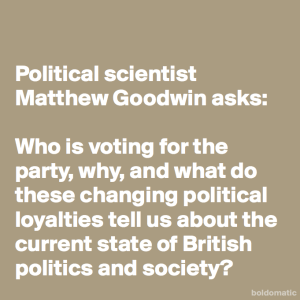
Was working in the garden yesterday, listening to a podcast from the RSA on something or other. Don’t quite remember actually. Anyway, as I was cutting up branches for the garden bin, sweeping up old leaves from the outside seating area and other typical ”it’s spring and there’s stuff to get done in the garden”-stuff, when one show from the RSA ended, a new one automatically began. That’s how I ended up listening to a pod on UKIP and the left behind: what a new party tells us about modern Britain. This is not an episode I would have put on from reading the heading, but I’m very glad that I got to listen to it. So I decided to make it the 15th podcast recommendation from me this year. (By the way, you can watch it as well if you prefer that. I don’t.)

BoldomaticPost_Political-scientist-Matthew-G

I don’t know much about the Swedish Democrats, honestly, and I certainly know even less about the UKIP in the UK, but as I listened I wondered if there are more similarities between the two parties, and the trends in the respective countries, or if what’s happening is totally different in Sweden and the UK?

Are the same demographic groups being attracted to the Swedish Democrats as to UKIP? Are the reasons for voting Swedish Democrats the same as those for voting UKIP? Has anybody done such a thorough analysis of the voters and rationales for voting Swedish Democrats as the analysis made by Matthew Goodwin in the UK?

I don’t know. Still. I haven’t gotten any answers to my pondering. But perhaps you know, and can help me learn more about this? Articles to read? Pods to listen to?

Day 90 + 1 – did you think I’d quit?

So, yesterday the Create the impossible-course ran it’s final and ninetieth day…. but surely no one actually believed I’d call it quits there, right? Oh no, I won’t quit, not until I have my sh*t together in all ways. I’ve had so much fun doing these 90 days, and I intend to keep having fun. In the physical house just two rooms remain, digitally I have more to do to come all the way, but I’ll get there. One day at a time.

Profilbild för Helena RothCleanse4expansion

Day 90 plus 1Day 90 + 1 of #cleanse4expansion – because seriously, you didn’t think I’d stop just because the Create the impossible-course ended, did you? I’m not done yet, so, #cleanse4expansion will continue. I might do it a bit differently, who knows. One thing I’ve already decided is to have wider borders on what I deem to be included in my project, like today when I’ve been working in the garden for hours, that will count as well. In a bikini top (and jeans, not just a bikini top, I promise) no less, because it’s been summer like outside today!

The day started off in a great way though, with a FB-message from a friend asking the price of the desk I posted about yesterday. And as it so happened, it was a perfect fit for them, they were moving today, had room for an office and the movers even came to…

Visa originalinlägg 237 fler ord

Mirror mirror on the wall

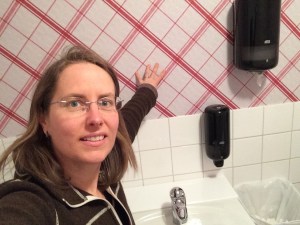
A few weeks ago I had lunch at a café I’d never visited before. Before leaving I stopped by the restroom and got totally perplex, but couldn’t really figure it out… until I washed my hands. Because what I saw then was NOT myself, which is what I’ve gotten used to seeing. Why? Well, simply because there’s always a mirror above the sink in a bathroom. But not here, here I just saw red checkered wallpaper.

mirrorIt’s an insignificant observation, because I had absolutely no problem washing my hands without having a mirror to stare at. (Otherwise I’d be getting really worried about myself!). But it made me realize something which I believe to be quite significant:

When something is so common to us it is just automatic, we stop noticing it.
Not until it disappears, do we notice the void. 

Which means that I go through a lot of life running in automatic mode. And that might absolutely have its merit, but sometimes I think it can turn quite dangerous to my ability to truly live life.

With each passing day, I experience a much greater awareness to the experience of life. An ever-growing consciousness that makes me see, feel, hear, smell, touch, taste and sense more of life.

That way to experience life is there for us all. All the time. Every day. Constantly available. The only requirement to this ordinary everyday miracle is being conscious to what goes on within and beyond you. Are you?

Responsibility

What is responsibility?
What does it mean?
How do I act responsibly?
And why do I have such strong attachment to the word, with a heavy feeling of sorts attached to it?

Those are but a few of the questions that arose a while ago, during a coaching call with my coach. Since then, I’ve toyed with the word, played with the concept, observed my feelings, written about it in my journal, and also spoken again and again with my coach about it, but also brought it up in other conversations.

I’ve gotten more insight. I’ve discovered the story I was telling myself about being responsible, and why it is ”something I have to do”. No wonder it had a heavy feel to it!

If I think responsibility is a heavy burden to bear, a must, something one should do, it’s only logical that it will have a very heavy feel to it. 

And you know what? It doesn’t have to.

The more I’ve sat with the word, I’ve realized responsibility can feel very light as well. It all depends on my state of mind. When I am in a low state of mind, I feel alone, having to carry the weight of responsibility all by myself. When, on the other hand, I am in a high state of mind, I feel connected to the Whole, to Mind, to whatever connects us all to each other (also when I’m in a low state of mind, mind you! Only when I’m low, I lose sight of the connection that is always there, as if I’ve gotten lost).

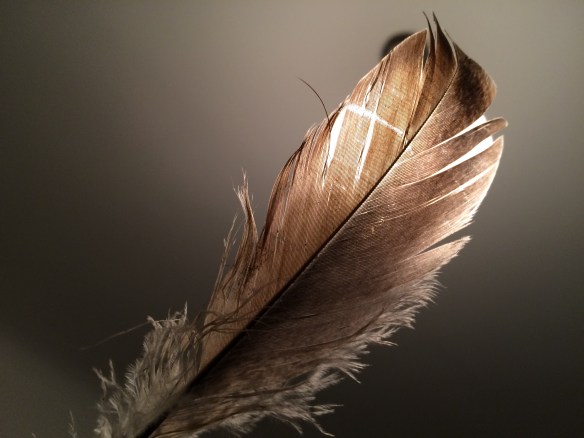
When I’m aware of the connection, feeling connected, responsibility is light as a feather. It’s as if I am no longer the only one to carry my load, like I’m larger than life, and no burden is too heavy. My self is so expanded, so connected to the energies of Mind, that I’m sharing the weight with everyone. Light. As a feather.

feather

I like the new relationship with Responsibility that I am exploring. What is Responsibility to you? Is it heavy? Or light as a feather?

Please be gentle, I’m still learning

”Please be gentle, I’m still learning” Robbie Williams sings in the song Advertising Space. Imagine living approximately forty years before getting that. Forty years before understanding that if I’m not gentle with myself, much less learning takes place. 

If I associate learning with pain, with being chastised, told off, ”I should have known”:ed, do you think my system would be promoting and encouraging learning? 

No. It (I) will run the other way. Shut down, slowly, insights will be fewer and farther apart… or at least, they will be significantly more quiet, almost unaudible. The inner voice of wisdom, of universal mind, will be barricaded, by myself, by my self-preserving ego. The innervoice will be unwanted. Out of fear. Fear of the pain that comes with learning, which I’ve associated with pain, harshness. 

And that will only change once I begin to be gentle with myself. And I speak from personal experience when I say that being gentle with me, is a very off concept for one accustomed to being harsh. Realizing my internal harshness was one of the greatest aha-moments of my life, and what I saw was that it’s not mandatory to be my own harshest judge. Kindness, gentleness, is an option. Also for me. 

This insight has been with me since 2006-2007 sometime, and took place during a therapy session. Since then I’ve practiced being gentle with myself, och it’s something which comes more and more natural to me nowadays. And that’s be reverting back to being more fully me, because I I think it is our natural state. We’re born and created to be gentle with ourselves, otherwise we wouldn’t be the learning creatures that we are, from the very get go. 

Imagine a small child being harsh with herself for not immediately knowing how to walk, run, ride a bicycle. A child is naturally gentle with themselves, trying, failing, falling down, trying again, failing, falling down, trying again…. over and over until suddenly, one step is managed, then two, then all of a sudden, the child can walk, can run, ride a bike. 

What happens to us? Why do we – at least I – stop being gentle with ourselves, and rather start to be hard on ourselves? Is that why children are the greatest learners there is? Not because adults don’t have the capacity to learn, but because we’ve stopped being gentle with ourselves, we expect to get things right away, and we are afraid to try and fail. Because we’ve put another meaning on what it means to fail, than the child trying to learn how to walk, run, rida a bike. We believe it means we are bad, not good enough. While the child simply knows it means that the learning process is still unfolding, there’s more to learn, more to master, before the learning process has manifested into yet another skill. And somehow, adults impose their faulty understanding upon children, creating yet another harsh un-learner. What if we adults instead learned from children what it is we are born to be? Life long learners, where the only prerequisite is being gentle to ourselves.

Please be gentle, I’m still learning. Are you?

Podcast 14/52 – we need a more economist way of thinking!

That’s a line I never thought I’d write, but Steven Pinker has an interesting rationale for stating that the world needs a more economist way of thinking. The way he describes it closely resembles a question I’ve entertained personally hundreds, if not thousands of times in the past 3-4 years: Does it serve me or not?

BoldomaticPost_What-makes-us-tick-Steven-PinCurious as to what I’m talking about?

Believe it or not, it’s another excellent show from London Real, featuring Steven Pinker. The episode was originally aired in 2013 if I understand it correctly, but it was just published again, so I picked up on it.

And I’m very happy I did. It’s an episode spanning all sorts of things, from Noam Chomsky to gun-control in the US, from linguistics to hunter-gatherer tribes, from what makes us tick to bullying, from economic thinking and utilitarianism to religion and the ever-decreasing amount of violence in the world. And just about everything in-between as well.

It’s a strangely optimistic podcast. After listening to it I have an urge to encourage more people to listen to it, if nothing else to hear Pinker explain the decline of violence, which he does in the beginning of the show.

He says (paraphrased):
If you paint your image of the world based (solely) on news sites, you will surely believe the world is more and more violent and evil, since the news media show that which happens (homicide, mass murder, war, terrorist attacks etc), and not that which doesn’t happen.

He makes a good point there, because news is about what happens. So even though there is less and less violence in the world, of which there is no doubt, news media will pick up on the violence that is there, because what would be the newsworthiness of a peaceful street corner of a previously violence-ridden neighborhood? None, or so it seems.

Steven Pinker seems to be a genuinely curious person, and he’s asking questions constantly in the podcast. Quite inspirational, I must say, and it makes me more curious about him. So he leaves me intrigued, and I am gonna listen to the podcast at least once more, to see if the connection between Pinker’s ”economist way of thinking” actually is similar to the way I use the question ”Does it serve me” or not.

When you read ”We need a more economist way of thinking in the world?” – what does that provoke in you? 

Water

Checking my Facebook feed I stumbled upon this short videoclip:

It’s a long time since I learned to not keep the tap on while brushing my teeth, and when I meet someone (when sharing living accommodations or staying at the house of family or friends for instance) who keeps the water running I find it very hard not to rush into the bathroom to turn the tap off. So far I’ve managed not to so just that, as I’m not so sure it would be welcome, but then I never really know how to bring it up in a way that might actually raise awareness. Now I do. A one-minute clip, with all the arguments necessary.

We’ve cut back quite a lot of our water usage at home, because there’s quite a lot of water preserving steps one can take, but turning off the water tap while brushing teeth is such a simple first step, that I strongly recommend you try it.

Have you ever given any thought to this equation:
(the amount of water being wasted while teeth are being brushed with tap running) x (the number of times you brush your teeth every day) x (the number of residents in your household) = ?