Podcast 19/52 – poetic tools

I listened to an On Being episode with composer Mohammed Fairouz, and immediately after listening to the edited version I listened to the unedited version, which was even better. Mohammed Fairouz is not a man I’d never heard of before, and I am glad that has been rectified.

He has a lovely positive outlook on the future, stating in no uncertain terms that he thinks the world will soon become a better place. Since I also hold that view, hard as it may be to stick to sometimes, given the barrage of negative news flowing all around, I exhale, and feel my body go a bit soft, relaxed, knowing there are many more people devoted to the same aspiration.

I’m going to say something that you may think me crazy to say. But I believe that the future is extremely bright. I believe that the future is hopeful. And I think that this generation is absolutely committed to making the world a better place. And I think they have the means to do it. And I think that if the world does not become a better place by the time that I’m 50 or 60, we have no one to blame but ourselves. We have the will. We have the drive.
– Mohammed Fairouz

It’s an episode that span large and far, in time, in space. Mohammed has a beautiful language, and I love the flow of the conversation. Mohammed says something which I’ve never heard and honestly never thought about. But it hit home somehow, and I’ve reflected upon it since I heard it. I believe there’s something there.

”Where”, you ask?
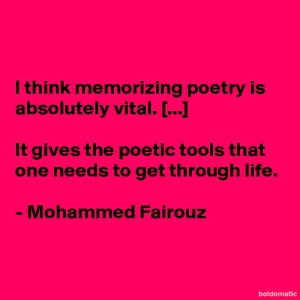
I reply ”Here”, and give you this:
BoldomaticPost_I-think-memorizing-poetry-is

Poetic tools. Isn’t that just a wonderful way to look at it? Poetic tools, do I even have any? I’m not sure I do. When spoken about this way, I sure get an urge to get myself some, don’t you?
Podcast 17/52 – lethal absence of hope

Here’s an episode of On Being with Krista Tippitt that I listened to first time around a couple of years ago. I recently listened to it again, and it affected me as much second time around. It’s with a Jesuit priest named Greg Boyle, famous for his work with gangs and gang members in and around Los Angeles. Perhaps you’ve heard about Homeboy Industries?

In the podcast, Greg Boyle describe what gangs are all about in this way:

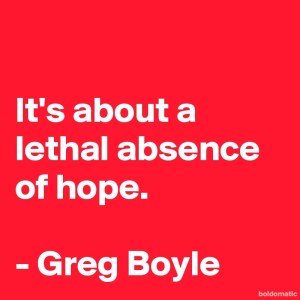
It’s about a lethal absence of hope. It’s about kids who can’t imagine a future for themselves. It’s about kids who aren’t seeking anything when they join a gang. It’s about the fact that they’re always fleeing something, always, without exception. So it shifts the way you see things. Somebody, Bertrand Russell or somebody, said, ”If you want to change the world, change the metaphor.” And that’s kind of how we want to — I think we need to proceed in something like this. So if you think it’s the Middle East, you’re quite mistaken. If you think it’s Northern Ireland, wrong again. It’s about kids who’ve ceased to care. So you want to infuse young people with hope when it seems that hope is foreign.

BoldomaticPost_It-s-about-a-lethal-absence-oA lethal absence of hope.

Oh, that’s powerful.
That hit me right in the gut.

And there’s so much more in this podcast, so please, take a listen. (And you can actually read it as well, but I do urge you to listen. There’s a feeling behind the words that is very apparent when listening to Father Greg speak about his homies.)

If what we are facing is a lethal absence of hope, and I don’t doubt it for a minute – what can I do? What can we do? What is there to do? And I don’t mean specifically about the gangs of Los Angeles. I mean about the lethal absence of hope that is visible everywhere. I don’t think there’s a country on earth, not facing just that somewhere or other within the confines of its borders. Do you?

So how to approach a lethal absence of hope?


Podcast 6/52 – The disembodied western culture

On Being is, as you might have guess, a favorite of mine, when it comes to podcasts. And this episode is as good as the next. Because they truly all have something special.

In this episode I met Bessel van der Kolk for the first time, and just from spending fifty minutes with him and Krista, I know I would love to listen more to him. He’s an interesting man, and I would love to meet him, talk to him, listen to him tell me more about what he’s discovered during his life.

There’s a part of the show, near the end, where Bessel and Krista talk about the disembodied Western culture, and I’ll just let you read for yourself:

DisembodiedDR. VAN DER KOLK: … Western culture is astoundingly disembodied and uniquely so. Because of my work, I’ve been to South Africa quite a few times and China and Japan and India. You see that we are much more disembodied. And the way I like to say is that we basically come from a post-alcoholic culture. People whose origins are in Northern Europe had only one way of treating distress: that’s namely with a bottle of alcohol.

North American culture continues to continue that notion. If you feel bad, just take a swig or take a pill. And the notion that you can do things to change the harmony inside of yourself is just not something that we teach in schools and in our culture, in our churches, in our religious practices. And, of course, if you look at religions around the world, they always start with dancing, moving, singing …

MS. TIPPETT: Yeah. Crying, laughing, yeah.

DR. VAN DER KOLK: Physical experiences. And then the more respectable people become, the more stiff they become somehow.

Disembodied. Stiff. Detached from ourselves.

Watched The Imitation Game for the second time the other day, and flinched at the ”stiff upper lip”-reference the head master makes when telling the teenaged Alan Turing about his friend Christoffer passing away during a holiday. I flinched, and feel very sad. How much pain have we, as a culture, not inflicted upon each other, by using words and phrases like that, setting that as the norm; being highly disembodied, clearly making it the thing to strive for.

And I think, even though Alan Turing must have been a school boy during the 20s, that it’s still so to a large extent. Rather than make use of our body for learning, school children in many many places are still told to sit still. Disembodied, that’s the culture we live in. And this is just one example, I’m sure I could come up with a number, if I wanted to. I don’t though.

Because perhaps there is a change coming? What with new research such as neuroscience, and new discoveries on learning, physical and mental development etc. Dare I hope?


The natural progress of society is surging!

Shocked to hear about the horrific attack on French satire magazine Charlie Hebdo yesterday. Woke up this morning and thought about the video clip with Reza Aslan slamming Bill Maher for saying ”Islam promotes violence”. What I hear Reza say is urge us all to taking extra care of our words, refraining from generalizations that harm more than anything else.

If you haven’t watched it, here it is:

Then, while making my morning green smoothie, I wanted to listen to a pod cast, and found an interview with Reza Aslan on On Being, which I listened to, taking great comfort in Rezas conclusion:

And so when I see fundamentalism surge, I know that what is really happening is that the natural progress of society is surging. And that fundamentalism is just reacting to it. So, I choose to focus on the progress, not the reaction to it.

It’s a very interesting conversation on the whole, as always with On Being, and it’s definitely well worth the time to listen to it:
http://www.onbeing.org/program/reza-aslan-on-islams-reformation/7039

Like Reza Aslan, I chose to focus on the progress of society as well. But at times like these, it sure takes some extra effort, not to fall into despair and angst. But I hope we can help each other stick to the path of progress, of love, light and gratitude. Will you help me, please?

Podcast 1/52 – Quiet places

VejbystrandWalking along the beautiful coastline of Vejbystrand just before New Years I listened to the most amazing episode from On Being, featuring acoustic ecologist (you’re in good company, I had no idea there was such a thing either!) Gordon Hempton sharing his love for nature and both sound and silence.
He speaks about silence not meaning the absence of sound, but rather the absence of noise. And the conversation Gordon and Krista have about the last quiet places really shook me up. I urge you to listen, and see if you get shook up as well. It made me realize that noise pollution really is all around us, and I’ve never really gave it proper consideration before. Did you?

Listen for the unknown #4

Why not stay where we left of with #3 yesterday with On being? Here’s another podcast from the same show, or actually, it’s old enough to be from Speaking of faith, which is what On being was called before. It’s been a few years since I first heard this specific podcast, and it’s remained with me since then. I just relistened to it and it’s as rich and rewarding today, as it was first time I listened to it. I remembered it to be called Being autistic, being human, but it turns out the episode is called Autism and humanity.

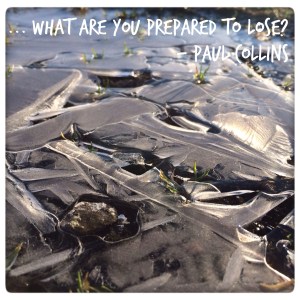
prepared to lose

What do you hear that you’ve never heard before?

Listen for the unknown #3

Curious if you, like me, heard anything that stopped you dead in your tracks when you listened to the podcast from The One You Feed in #2?

Today, on to another of my absolute favorite podcasts, that I just realised I haven’t listened to all year. Most definitely want to change that for 2015, because On Being with Krista Tippitt holds loads of unknowns for me. Here’s lots to listen for, that I’ve never heard before, and Kristas style of being in conversation during her interviews is right up my alley.

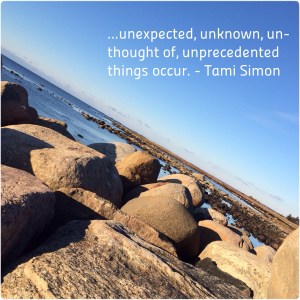
Here’s an episode called Inner life at work, with guest Tami Simon.

unknown

What do you hear that you’ve never heard before?

Part 4, Seth at On Being

Seth Godin on On Being with Krista Tippit, part 4. I have gotten a whole lot more from this podcast, but these four blog posts are what made it into visible form.

They end their talk with talking about how we encourage or discourage children to contribute to society. Seth ponders:

Kids’ role as a contributor to society starts now when they are ten, not when they are twenty four, and that the trail they leave behind starts the minute someone snaps their picture.

If we can teach children that there isn’t this bright line between off duty and on duty, but that life is life, and you ought to live it like people are looking at you, cuz they are. Then we trust them, and we trust them to be bigger than they could be, because they chose to be bigger.

And it’s that teaching, I think, that’s so difficult to do as a parent, cuz what you really want to do is protect them and lock ‘em up until it’s time, but the bravest thing to do is have these free range kids, exploring the edges of their universe, but doing it in ways they are proud of, not hiding from.

Wow, I must say that to me defines the shift we need to take in society, to start to build a sustainable and constantly learning society. Let us encourage free range kids, kids who explore the edges of their universe!

Sia in i framtiden

What might happen if you expored the edges of your universe?

Part 3, Seth at On Being

Continuing my ponderings from listening to Seth Godin being interviewed by Krista Tippitt on On Being, I am reminded of the world that I believe we can create, a world that works better than today.

Seth talks about building your tribe, and he talks about tribes in a new form, where the internet helps to create tribes not limited by geography.

The challenge of our future is… are we going to connect and amplify positive tribes, that want to make things better for all of us, or are we going to degrade to warring tribes, who are willing to bring other groups down, just so they can get ahead.

Fia med knuffI believe in a world of positive tribes, a world where we help each other out, rather than compete against each other. Water, for instance, will likely be a scarce resource in the future. Should we fight fr it or collaborate? I’m not saying it will be easy to get to a world of positive tribes, but it can be done. Do you agree?

Part 2, Seth at On Being

While listening to Krista Tippitt interviewing Seth Godin I stopped many times to take notes. Here’s one.

Seth is big on creativity, and wisely stated:

Everybody has the possibility of
being an artist
rather than a cog

I have written about cogs myself in a guest blog post (in Swedish). I think we all are cogs in the sense that we are all closely connected, and all that I do influence the world and people in it more than I can imagine.

Onlyness

But what Seth is speaking about is the fact that these cogs are not identical. We are not interchangeable parts, churned out in billions. Rather, we are unique, we each have our onlyness, but we can make more or less of it.

What’s your artistry?